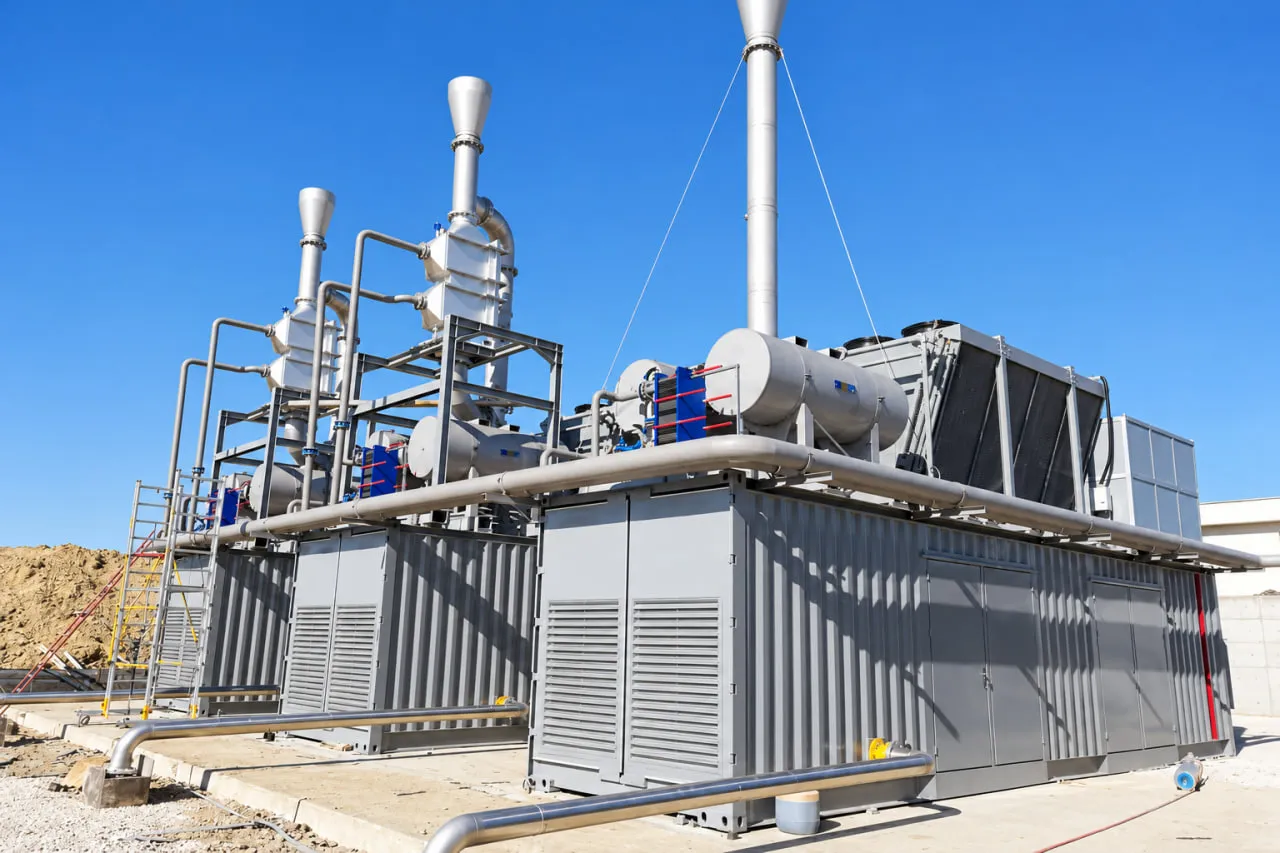
A data center’s building and IT infrastructure may be ready before enough electrical capacity is available to operate at the planned load. A delayed grid connection or a limited initial power allocation can directly affect the commissioning schedule. In these circumstances, onsite power generation is one option to assess.
At sites without access to a natural gas pipeline, LNG can provide fuel for gas-engine generator sets. However, the decision involves more than selecting generator capacity. LNG supply, storage, regasification, electrical infrastructure and operating conditions must be assessed together.
Why Do Grid Connection Delays Matter?
For data center projects, the electricity connection may follow a different schedule from construction and equipment installation. Grid reinforcement, connection infrastructure and equipment procurement can delay access to power.
The International Energy Agency’s (IEA) Energy and AI report estimates that around 20% of planned data center projects could face delays unless grid constraints are addressed. This highlights the importance of considering the power supply plan early in project development.
The first question is not only when the connection will become available, but how much power will be needed until then. Whether the entire facility or only an initial phase must be brought online changes the scale of the onsite generation system.
What Role Will Onsite Generation Serve?
Supplying a facility while it waits for a grid connection is a different operating scenario from providing backup during an outage. Operating hours, maintenance requirements and fuel consumption must be assessed accordingly.
| Scenario | Purpose | Main considerations |
|---|---|---|
| Bridge power until grid connection | Supply the defined facility load until the connection is completed | Expected operating period, load growth and the system’s subsequent role |
| Continuous onsite generation | Meet the facility’s electricity demand through long-term onsite generation | Fuel supply, maintenance continuity and total generation cost |
| Emergency backup | Support the load when the main electricity supply is interrupted | Start-up requirements, fuel autonomy and power system integration |
LNG infrastructure supplies fuel to the generators. Power transfer during an interruption, power quality and continuity for critical loads must be addressed through the combined design of the UPS, energy storage, generators, distribution system and control architecture.
How Does LNG-to-Power Work?
In an LNG-to-power system, liquefied natural gas is delivered to the site, stored and regasified. The resulting natural gas is conditioned to meet the generator’s requirements and used to produce electricity.
Every component in this chain must have compatible capacity and operating limits. Adequate generator capacity alone is insufficient if the fuel supply cannot support it or the electrical system cannot respond appropriately to load changes.
Uestco’s LNG-to-power solution for data centers considers the LNG supply arrangement, modular regasification and fuel interface integration with the selected gas generator as a coordinated system.
Which Projects Could Benefit?
This approach can be assessed for data center projects facing delayed grid connections, insufficient initial electrical capacity or no access to pipeline gas. For phased developments, generation and fuel infrastructure can also be evaluated against the planned stages of load growth.
A modular design can help accommodate capacity increases. However, the ability to add containers or skids does not mean a site can expand without limits. Space, connection capacity, permits, fuel delivery arrangements and electrical infrastructure must be checked for each phase.
What Should a Feasibility Assessment Cover?
Total Facility Load
Sizing should not be based on server power alone. Total facility demand must include cooling, power conversion losses and auxiliary systems. The initial operating load, expected growth and load variations should be considered in the same assessment.
Fuel Consumption and Delivery Continuity
LNG consumption depends on generator electrical efficiency, operating load and fuel properties. These inputs are used to calculate daily demand, storage capacity, delivery frequency and the fuel reserve needed to accommodate delivery delays.
Delivery routes, unloading or container exchange arrangements, and alternative supply options also matter. Operating independently of the electricity grid does not mean operating independently of fuel logistics.
Redundancy and Maintenance
Redundancy should not be assessed by generator count alone. Shared fuel supply equipment, regasification capacity, control systems and components that may be unavailable during maintenance must also be evaluated against the facility’s continuity requirements.
Permits and Site Conditions
The layout of the LNG storage and power generation installation, applicable regulations and permitting processes must be incorporated into the project schedule. Emissions, noise, access and maintenance space can also affect feasibility.
- Site location and target commissioning date
- Available grid capacity and expected connection schedule
- Initial and final total electrical load
- Daily load profile and expected operating hours
- Generator selection or manufacturer specifications
- LNG supply locations and site access conditions
- Fuel reserve, maintenance and redundancy requirements
- Available site area, permits and environmental requirements
The economic assessment should also extend beyond equipment investment. Fuel, transportation, operation, maintenance, auxiliary energy consumption and the expected operating period must be considered together. Onsite LNG-to-power should not be assumed to be cheaper than grid electricity in every project.
What Happens After the Grid Connection Becomes Available?
The subsequent role of a bridge power installation should be considered when making the initial investment decision. Depending on the project, the system could be retained for backup, relocated to another site or operated in parallel with the grid under suitable conditions.
These options are not automatically available. Grid-parallel operation requires an assessment of connection conditions, protection and controls. Reusing modular equipment elsewhere also depends on the new site’s capacity requirements and permits.
The question is not only “How many MW can be generated?” It is also how that power will be supported by fuel supply, operating arrangements and continuity provisions.
Frequently Asked Questions
Can electricity be generated without access to pipeline gas?
Yes. LNG can be delivered to the site and regasified to supply suitable gas-engine generators. This requires reliable LNG supply, appropriate site infrastructure and the necessary permits.
Does an LNG system guarantee uninterrupted power for a data center?
Not on its own. Fuel infrastructure, generation equipment, UPS, electrical distribution, redundancy and maintenance arrangements must be designed together.
How long does deployment take?
The schedule depends on capacity, equipment availability, permits, site preparation and LNG logistics. A fixed commissioning period should not be stated without a project-specific assessment.
How is LNG storage capacity determined?
It is determined using total electrical load, generator efficiency, operating hours, fuel properties and delivery frequency. Usable inventory and the reserve required for potential delivery delays must also be included.
We can review your load profile, target commissioning date and site location to assess LNG supply, regasification and generator interface requirements.