Technical ArticlesBioLNGUestco Engineering
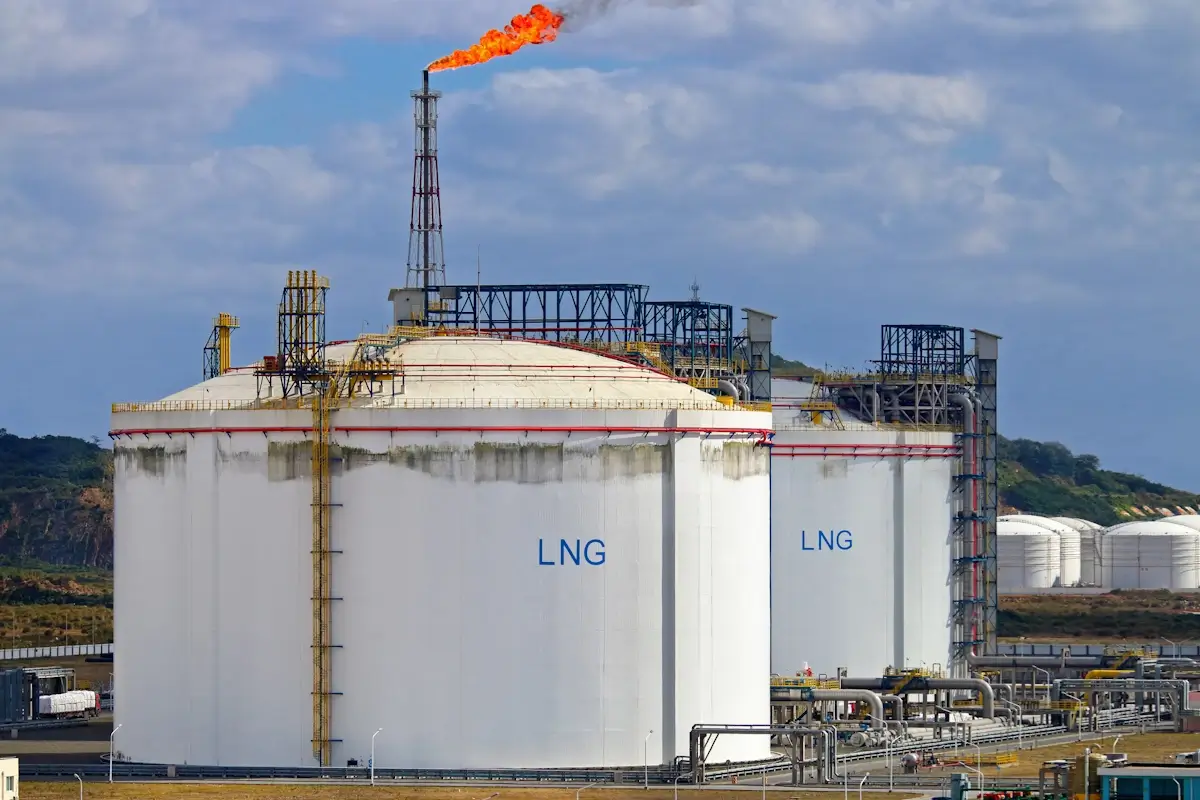
BioLNG (liquefied biomethane) is a renewable fuel produced by upgrading biogas from organic waste and liquefying it at approximately -162 °C. Chemically it is identical to fossil LNG, so it works in existing LNG vehicles, tanks and refuelling stations without any modification. Unlike raw biogas, it is transportable and energy-dense, which lets production in areas without a pipeline reach high-value markets — above all heavy road transport and shipping. Because it is waste-derived, its lifecycle emissions are up to 90% lower than fossil LNG; for this green value to be recognised in the market, however, the fuel must be certified with a guarantee of origin. This article covers what BioLNG is, how it is produced, how it differs from fossil LNG, and where it is used.
What is BioLNG?
Two things define BioLNG: its source and its physical state. Its source is organic — animal manure, agricultural residues or food waste are converted into biogas through anaerobic digestion, and the biogas is then upgraded to biomethane by removing CO₂ and raising the methane content. Its physical state is liquid — once biomethane is cooled to -162 °C, its volume shrinks roughly 600-fold, so it can be shipped by tanker without a pipeline.
The only difference from fossil LNG is the origin of the carbon: one is extracted from underground, the other is made from waste. Otherwise the two are stored in the same tanks and burned in the same engines. In the literature it also appears as LBM and LBG; all three terms describe the same product.
| Term | Meaning | Methane content | Physical state |
|---|---|---|---|
| Biogas | Raw digester output | 50–70% | Gas, atmospheric |
| Biomethane | Upgraded biogas | >95% | Gas, atmospheric |
| Bio-CNG | Compressed biomethane | >95% | Gas, 200–250 bar |
| BioLNG (LBM / LBG) | Liquefied biomethane | >99% | Liquid, -162 °C |
How is BioLNG produced?
BioLNG is produced in four steps: anaerobic digestion, pre-treatment, upgrading and liquefaction. The key point is that each step directly constrains the next. If pre-treatment is inadequate, the remaining moisture and impurities freeze in the cryogenic line and reduce the efficiency of liquefaction — the most capital-intensive step. This is also why the purity targeted for BioLNG is higher than for grid biomethane (>99%): nitrogen and oxygen are not separated in the cryogenic cycle and pass directly into the product. Details: How BioLNG is produced →
BioLNG vs. LNG: what is the difference?
BioLNG and fossil LNG are the same fuel; they sit in the same tank and burn in the same engine. So looking for the difference in the product itself is misleading. The real difference lies in where the fuel comes from: BioLNG is made from waste, while fossil LNG is extracted from the ground. This difference in origin matters because it determines the greenhouse gases released over the fuel’s lifecycle. BioLNG’s carbon footprint is far lower, and this advantage is greatest for waste- and manure-based production.
On the commercial side, however, there is a decisive condition: without certification, BioLNG is indistinguishable from fossil LNG and therefore trades at the same price. The only thing that proves a fuel is renewable is the guarantee of origin. Details: BioLNG vs LNG → · BioLNG certification →
Benefits of BioLNG
BioLNG is attractive not because of a single feature, but because several come together:
- Strong emissions profile: waste-based production sharply cuts lifecycle emissions, and manure-based routes can even be net-negative — a value that becomes commercial once certified.
- Drop-in compatibility with existing infrastructure; no change needed to LNG engines, tanks or stations.
- Turns waste into dual value: a sellable fuel plus organic fertiliser (digestate) for agriculture.
- Independent of the grid; delivered by tanker to locations without a pipeline.
- Being domestic and renewable, it reduces import dependence and supports security of supply.
BioLNG applications
BioLNG delivers the most value where sites cannot be fed from the grid but need plenty of energy. Long-haul heavy transport comes first. It is followed by shipping and marine bunkering. Industrial sites without a natural-gas connection, and logistics fleets running fixed routes, are also strong use cases. In fact, around 80% of the BioLNG produced in Europe goes to road transport.
BioLNG in Europe and Uestco’s role
Europe is the core market for BioLNG, and it is scaling fast. According to the European Biogas Association (EBA) and Gas Infrastructure Europe (GIE), installed biomethane production capacity on the continent reached 8.2 billion m³/year by the end of the second quarter of 2026 (GIE / EBA, European Biomethane Map 2026). Demand is reinforced by EU policy: under the Renewable Energy Directive (RED II/III), certified renewable fuels carry a regulatory and commercial premium (European Commission – Renewable Energy Directive).
For a producer or buyer serving this market, two things matter most: EU-recognised certification (ISCC EU, REDcert) that carries the fuel’s green value across borders, and a partner able to deliver the full chain in practice. Uestco works on exactly this chain — pre-treatment, upgrading, liquefaction and refuelling — and has delivered it in the field: Romania’s first BioLNG and LNG refuelling station was completed by Uestco in cooperation with the operator Vulcangas in 2024 (Uestco – News).
Frequently asked questions
Can BioLNG be used in existing LNG vehicles?
Yes. Because the two are chemically the same product, BioLNG runs in existing LNG engines, tanks and refuelling stations without any modification, and can be blended with fossil LNG in the same tank.
How much biogas is needed for 1 tonne of BioLNG?
Roughly 2,500 Nm³ of raw biogas. The exact figure depends on the methane content of the gas and the recovery efficiency of upgrading.
Why does BioLNG need certification?
Because BioLNG cannot be physically distinguished from fossil LNG, its renewable nature can only be proven on paper. Without certification it trades at the fossil-LNG price; with an EU-recognised guarantee of origin and proof of sustainability, its green value becomes tradable.
What is the difference between BioLNG and bio-CNG?
Both are made from biomethane; the difference is physical state and use profile. Bio-CNG is biomethane compressed to 200–250 bar; BioLNG is biomethane liquefied at about -162 °C. Because BioLNG carries far more energy per unit volume, it is preferred for long-distance heavy transport, shipping and high-consumption industry, while bio-CNG suits short-distance distribution and local light fleets.
Is BioLNG environmentally friendly? What is its carbon footprint?
Because it is made from waste, BioLNG’s lifecycle carbon footprint is far lower than fossil LNG’s; up to 90% greenhouse-gas reduction is reported for waste-based feedstock, and manure-based routes can even be net-negative. For this value to count commercially and in regulation, however, it must be certified with a guarantee of origin.
- IEA – Outlook for Biogas and Biomethane: Prospects for Organic Growth
- European Commission – Renewable Energy Directive (RED)
- European Commission / JRC – Definition of input data to assess GHG default emissions from biofuels in EU legislation
- Gas Infrastructure Europe / European Biogas Association – European Biomethane Map 2026 (press release, 30 June 2026)
- ISCC – International Sustainability & Carbon Certification
- REDcert
Uestco is an engineering company specialising in biogas pre-treatment, upgrading, liquefaction and LNG refuelling systems.